News
Tips and Methods for Selecting Slewing Bearing Manufacturers?
If you are a trading company sourcing slewing bearings domestically for both domestic and international clients, how do you identify professional suppliers or manufacturers offering both quality and competitive pricing? Below are methods for selecting slewing bearing suppliers suitable for export needs, provided for reference by international trade partners:
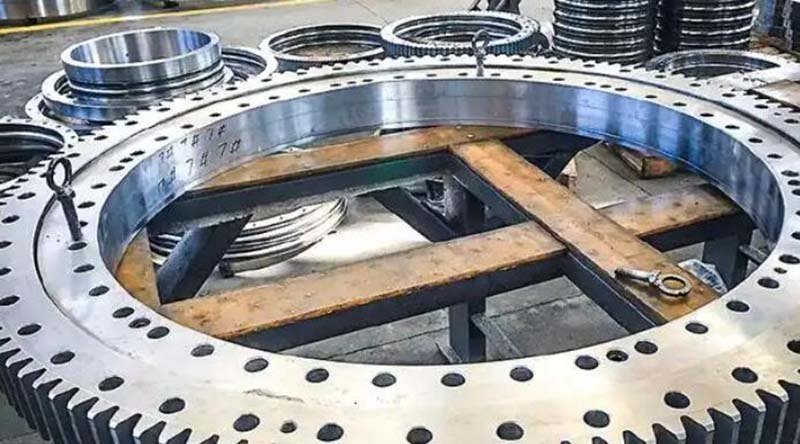
1. Prioritize Verification of ISO 9001:2015 Quality Management Certification
International clients generally require supplier qualifications: Holding ISO 9001:2015 certification does not guarantee absolute product quality compliance, but lacking this certification indicates significant gaps in the company's rotating bearing quality management system—this serves as the foundational threshold for most international clients when evaluating supplier compliance.
2. Require raw material quality certificates
As the core rotating component in machinery, quality issues in ring-forged blanks can cause equipment downtime, skyrocketing maintenance costs, or even safety hazards. Taking Xuzhou Slewing Bearings as an example, we exclusively source ring-forged blanks from certified forging plants and provide clients with complete raw material quality certificates. Suppliers unable to furnish these certificates raise doubts about their material sourcing and quality control capabilities, warranting caution in collaboration.
3. Assess factory scale and actual production capacity
Evaluate whether suppliers can meet order demands based on the following dimensions, avoiding reliance on verbal commitments alone:
Factory area and workshop layout (including dedicated forging/machining/inspection workshops)
Core equipment inventory (e.g., quantity and models of CNC vertical lathes, roller quenching machines)
Number of production/technical personnel (directly impacting capacity and process stability)
R&D investment ratio (critical for customization capabilities)
Request suppliers to provide monthly production data from the past 3 months and examples of their largest order fulfillment cases to ensure their capacity aligns with your delivery schedule and batch requirements.
4. Verify financial capacity for large orders
Small-to-medium intermediaries or manufacturers often lack sufficient working capital to support large orders (e.g., raw material procurement, temporary production line expansion). When searching for “sleeper bearing suppliers,” verify the following:
Registered capital and annual revenue over the past year
Bank credit references (or letters of recommendation from partner banks)
Track record of large-order collaborations (e.g., serving multinational equipment manufacturers)
For SME traders, a supplier's financial strength directly impacts order fulfillment reliability.
5. Verify Export Experience and Localization Capabilities
Exporting slewing bearings requires meticulous process control: compliance with US ANSI standards, European EN standards, or protective treatments for Southeast Asia's humid environments. Additionally, specialized foreign trade teams are needed to handle customs clearance, documentation (e.g., certificates of origin, packing lists), and cross-border logistics coordination. If a manufacturer lacks export track records or has no dedicated foreign trade department, it likely lacks experience producing high-precision slewing bearings and may struggle to meet international client requirements.
Xuzhou Slewing Bearings possesses mature export service capabilities to fully meet your export needs: not only adhering to international quality management standards, but also offering competitive pricing. Currently, our slewing bearings and slewing drive products are exported to the United States, Europe, and Southeast Asian countries like Indonesia and Malaysia, while also covering parts of the African market. We look forward to collaborating with more quality traders to jointly expand the global slewing bearing market.
Categories
Latest News
- What is the working principle of slewing bearings?
- What is a Slewing Bearing? An In-Depth Look at Its Core Components
- How Do Slewing Ring Bearing Manufacturers Ensure Exceptional Rotational Precision?
- How to Choose the Right Slewing Bearing Manufacturer
- How to Effectively Evaluate a Slewing Bearing Manufacturer